Tuesday, March 2, 2010

2010 Chile earthquake - Earthquake Era - 2010


Earthquake in Chile

At 3:34 am local time, today, February 27th, a devastating magnitude 8.8 earthquake struck Chile, one of the strongest earthquakes ever recorded. According to Chilean authorities, over 400 people are now known to have been killed. The earthquake also triggered a Tsunami which is right now propagating across the Pacific Ocean, due to arrive in Hawaii in hours (around 11:00 am local time). The severity of the Tsunami is still not known, but alerts are being issued across the Pacific. (Entry updated four times, now 45 photos total)

Cars lie overturned after the highway they were travelling on was destroyed in an earthquake in Santiago February 27, 2010. (REUTERS/Marco Fredes)

A resident of Talca, Chile, walks amid debris of a destroyed house after a powerful earthquake struck the country early Saturday, Feb. 27, 2010. (AP Photo/Roberto Candia) #


Warning:
This image contains graphic
or objectionable content

click here to view it.
Residents look at the body of a dead man lying in a street of Talca, some 275 kilometers south of Santiago, Saturday, Feb. 27, 2010, after an 8.8-magnitude struck central Chile. The quake hit 200 miles (325 kilometers) southwest of the capital and the epicenter was just 70 miles (115 kilometers) from Concepcion, Chile's second-largest city. (AP Photo/Roberto Candia) #

The walls and aisles of a pharmacy in Vina del Mar are seen destroyed after a huge 8.8-magnitude earthquake rocked Chile early on February 27, 2010. The massive quake plunged much of the Chilean capital, Santiago, into darkness as it snapped power lines and severed communications, and AFP journalists spoke of walls and masonry collapsing. People in pajamas fled onto the streets. (MARTIN BERNETTI/AFP/Getty Images) #

People walk along a highway with a collapsed bridge in the background in the outskirts of Santiago after a huge 8.8-magnitude earthquake rocked Chile early on February 27, 2010. (MARTIN BERNETTI/AFP/Getty Images) #

A police officer controls the traffic aside of an elevated highway that collapsed in Santiago following a powerful earthquake in central Chile, Saturday, Feb. 27, 2010. (AP Photo/David Lillo) #

Smoke from a burning building fills the sky in the outskirts of Santiago after a huge 8.8-magnitude earthquake rocked Chile on February 27, 2010. (MARTIN BERNETTI/AFP/Getty Images) #

A resident takes photos of a building damaged in Talca, Chile, Saturday, Feb. 27, 2010. (AP Photo/Sebastian Martinez) #

With a computer graphic showing the possible path of tsunami waves from an earthquake in Chile, Dr. Charles McCreery speaks on the phone at the Pacific Tsunami Warning Center, Saturday, Feb. 27, 2010 in Ewa Beach, Hawaii. The State of Hawaii is under a tsunami warning after an 8.8 magnitude earthquake rattled Chile today. (AP Photo/Marco Garcia) #


Warning:
This image contains graphic
or objectionable content

click here to view it.
A police officer and residents carry a body from a destroyed house in Talca, Chile, some 275 kilometers south of Santiago, Saturday, Feb. 27, 2010 after an 8.8-magnitude struck central Chile. (AP Photo/Sebastian Martinez) #

The walls of a hotel in Vina del Mar are seen destroyed after a huge 8.8-magnitude earthquake rocked Chile on February 27, 2010. (MARTIN BERNETTI/AFP/Getty Images) #

A woman sits in front a quake-damaged house in Talca, Chile, after a 8.8-magnitude earthquake struck the country early Saturday, Feb. 27, 2010. (AP Photo/Sebastian Martinez) #

Rescue workers search for victims and survivors after an apartment complex collapsed during an earthquake in Concepcion some 100 km (62 miles) south of the epicenter, February 27, 2010. (REUTERS/Jose Luis Saavedra) #

A survivor is lowered by a cable as rescue workers search for victims after an apartment complex collapsed during an earthquake in Concepcion, Chile on February 27, 2010. (REUTERS/Jose Luis Saavedra) #

A man moves his belongings inside his home destroyed in an earthquake in Valparaiso February 27, 2010. (REUTERS/Eliseo Fernandez) #

A man walks past a wrecked church in Santiago, Chile on February 27, 2010. (MARTIN BERNETTI/AFP/Getty Images) #

People observe a highway and cars destroyed by an earthquake in Concepcion, Chile on February 27, 2010. (REUTERS/Jose Luis Saavedra) #

Cyclists observe a bridge that collapsed in an earthquake in Concepcion, Chileon February 27, 2010. (REUTERS/Jose Luis Saavedra) #


1st Update, 1:35 pm Eastern Time


Photograph taken this morning of Concepcion, Chile by astronaut Soichi Noguchi, aboard the International Space Station: "Concepcion, Chile. Mega earthquake (M8.3) hit this city this morning. Photo taken a few hours ago. We pray for you." On TwitPic (Shoichi Noguchi) #

Vehicles sit on a destroyed motorway in Santiago following a powerful earthquake in southern Chile, Saturday, Feb. 27, 2010. (AP Photo/Carlos Espinoza) #

An overturned vehicle sits amidst rubble of a collapsed elevated highway in Santiago, Saturday, Feb. 27, 2010. A powerful earthquake struck central Chile early Saturday. (AP Photo/Carlos Espinoza) #

Residents look at a collapsed building in Concepcion, Chile, Saturday Feb. 27, 2010 after an 8.8-magnitude struck central Chile. The epicenter was 70 miles (115 kilometers) from Concepcion, Chile's second-largest city.(AP Photo) #

A man carries a child next to a damaged building in Concepcion, Chile, Saturday Feb. 27, 2010 after an 8.8-magnitude struck central Chile. (AP Photo) #

A resident walks along a damaged street in Talca, Chile, Saturday, Feb. 27, 2010, after a powerful earthquake struck central Chile. (AP Photo/Roberto Candia) #


2nd Update, 4:30 pm Eastern Time


An apartment block leans over after an earthquake in Santiago February 27, 2010.(REUTERS/Marco Fredes) #

An immigrant from Peru steps over debris after a major earthquake destroyed homes along Santo Domingo Street in Santiago February 27, 2010. (REUTERS/Marco Fredes) #

A man looks at the damage to the Accademy of Fine Arts building in Santiago after a huge 8.8-magnitude earthquake rocked Chile early morning killing at least 147 people, on February 27, 2010. (CLAUDIO SANTANA/AFP/Getty Images) #

A man rides his bicycle past a destroyed building in Concepcion, Chile, Saturday Feb. 27, 2010 after an 8.8-magnitude struck central Chile. The epicenter was 70 miles (115 kilometers) from Concepcion, Chile's second-largest city. (AP Photo) #

A man looks at rubble in Valparaiso, Chile, after a huge 8.8-magnitude earthquake rocked the country early morning killing at least 147 people, on February 27, 2010. (JORGE AMENGUAL/AFP/Getty Images) #


3rd Update, 6:15 pm Eastern Time


A destroyed bridge is seen next to Talca some 300 km (186 miles) south of Santiago February 27, 2010. (REUTERS/Victor Ruiz Caballero) #

A man carries a religious icon after an earthquake in Santiago February 27, 2010. (REUTERS/Sebastian Escobar) #

Women cry next to a destroyed building in Talca, Chile on February 27, 2010. (REUTERS/Victor Ruiz Caballero) #

Fishing boats washed up by a wave generated by an earthquake are seen in Talcahuano Port, a city just outside Concepcion, Chile on February 27, 2010. (REUTERS/Jose Luis Saavedra) #

Children walk past shipping containers washed up by a wave caused by an earthquake in Talcahuano Port, a city just outside Concepcion, Chile on February 27, 2010. (REUTERS/Jose Luis Saavedra) #

A policeman looks at cars washed against an apartment building by a wave generated by an earthquake in Talcahuano Port, near Concepcion, Chile on February 27, 2010. (REUTERS/Jose Luis Saavedra) #


4th (and final) Update, 12:15 pm Eastern Time, 2/28


Chile's President Michelle Bachelet looks at collapsed houses after an earthquake in Concepcion, Chile, Saturday, Feb. 27, 2010. (AP Photo/Chile Presidency)#

A house lies destroyed by a major earthquake in Pelluhue February 27, 2010. (REUTERS/Ivan Alvarado) #

Residents sleep in their cars, some because their homes are damaged and others for fear of aftershocks, after an earthquake in Concepcion February 28, 2010. (REUTERS/Jose Luis Saavedra) #

A car is seen submerged in a flooded area due to a tsunami in Talcahuano the day after a huge 8.8-magnitude earthquake rocked Chile early morning killing at least 300 people, on February 28, 2010. The South American nation has been hit by numerous aftershocks, some reaching over 6 points on the Richter scale, as well as heavy damages in coastal towns resulting from subsequent tsunamis. (MARTIN BERNETTI/AFP/Getty Images) #

A flooded area is seen after an earthquake in Pelluhue, some 322 kms, about 200 miles, southwest of Santiago, Sunday, Feb. 28, 2010. (AP Photo/Roberto Candia) #

People walk along the shore after an earthquake in Pelluhue, some 322 kms, about 200 miles, southwest of Santiago, Sunday, Feb. 28, 2010. (AP Photo/Roberto Candia) #

Residents try to force their way into a supermarket to buy food and essentials as police try to keep order after an earthquake in Concepcion February 28, 2010. (REUTERS/Jose Luis Saavedra) #

Residents loot a supermarket after an earthquake in Concepcion February 28, 2010. Chilean rescuers used shovels and sledgehammers on Sunday to find survivors of a huge earthquake in Chile that unleashed a Pacific tsunami and triggered looting by desperate and hungry residents. (REUTERS/Jose Luis Saavedra) #

A man holds up a Chilean flag in a flooded area after an earthquake in Pelluhue, some 322 kms, about 200 miles, southwest of Santiago, Sunday, Feb. 28, 2010. (AP Photo/Roberto Candia) #

Relatives of victims of an earthquake cry outside a destroyed building in Concepcion, Sunday, Feb. 28, 2010. (AP Photo/ Aliosha Marquez) #


Friday, February 26, 2010

Connection strings for Oracle


.NET Framework Data Provider for Oracle

Type:    .NET Framework Class Library
Usage:  System.Data.OracleClient.OracleConnection
Manufacturer:  Microsoft
More info about this class library »
Data Source=MyOracleDB;Integrated Security=yes;
This one works only with Oracle 8i release 3 or later
Specifying username and password
Data Source=MyOracleDB;User Id=myUsername;Password=myPassword;Integrated Security=no;
Omiting tnsnames.ora
This is another type of Oracle connection string that doesn't rely on you to have a DSN for the connection. You create a connection string based on the format used in the tnsnames.ora file without the need to actually have one of these files on the client pc.
SERVER=(DESCRIPTION=(ADDRESS=(PROTOCOL=TCP)(HOST=MyHost)(PORT=MyPort))(CONNECT_DATA=(SERVICE_NAME=MyOracleSID)));uid=myUsername;pwd=myPassword;
Some reported problems with the one above and Visual Studio. Use the next one if you've encountered problems.
Data Source=(DESCRIPTION=(ADDRESS=(PROTOCOL=TCP)(HOST=MyHost)(PORT=MyPort))(CONNECT_DATA=(SERVICE_NAME=MyOracleSID)));User Id=myUsername;Password=myPassword;
Using Connection Pooling
The connection pooling service will create a new pool if it can't find any existing pool that exactly match the new connections connection string properties. If there is a matching pool a connection will be recycled from that pool.
Data Source=myOracleDB;User Id=myUsername;Password=myPassword;Min Pool Size=10;Connection Lifetime=120;Connection Timeout=60;Incr Pool Size=5;Decr Pool Size=2;
The first connection opened creates the connection pool. The service initially creates the number of connections defined by the Min Pool Size parameter.

The Incr Pool Size attribute defines the number of new connections to be created by the connection pooling service when more connections are needed.

When a connection is closed, the connection pooling service determines whether the connection lifetime has exceeded the value of the Connection Lifetime attribute. If so, the connection is closed; otherwise, the connection goes back to the connection pool.

The connection pooling service closes unused connections every 3 minutes. The Decr Pool Size attribute specifies the maximum number of connections that can be closed every 3 minutes.
Windows Authentication
Data Source=myOracleDB;User Id=/;
Privileged Connection
With SYSDBA privileges
Data Source=myOracleDB;User Id=SYS;Password=SYS;DBA Privilege=SYSDBA;
Privileged Connection
With SYSOPER privileges
Data Source=myOracleDB;User Id=SYS;Password=SYS;DBA Privilege=SYSOPER;
Utilizing the Password Expiration functionality
First open a connection with a connection string. When the connection is opened, an error is raised because the password have expired. Catch the error and execute the OpenWithNewPassword command supplying the new password.
Data Source=myOracleDB;User Id=myUsername;Password=myPassword;

oConn.OpenWithNewPassword(sTheNewPassword);
Proxy Authentication
Data Source=myOracleDB;User Id=myUsername;Password=myPassword;Proxy User Id=pUserId;Proxy Password=pPassword;

dotConnect for Oracle

Type:    .NET Framework Class Library
Usage:  Devart.Data.Oracle.OracleConnection
Standard
User ID=myUsername;Password=myPassword;Host=ora;Pooling=true;Min Pool Size=0;Max Pool Size=100;Connection Lifetime=0;

Microsoft OLE DB Provider for Oracle

Type:    OLE DB Provider
Usage:  Provider=msdaora
Manufacturer:  Microsoft
More info about this provider »
Standard security
This connection string uses a provider from Microsoft.
Provider=msdaora;Data Source=MyOracleDB;User Id=myUsername;Password=myPassword;
Trusted connection
Provider=msdaora;Data Source=MyOracleDB;Persist Security Info=False;Integrated Security=Yes;

Oracle Provider for OLE DB

Type:    OLE DB Provider
Usage:  Provider=OraOLEDB.Oracle
Manufacturer:  Oracle
More info about this provider »
Standard Security
Provider=OraOLEDB.Oracle;Data Source=MyOracleDB;User Id=myUsername;Password=myPassword;
Trusted Connection
This one specifies OS authentication to be used when connecting to an Oracle database.
Provider=OraOLEDB.Oracle;Data Source=MyOracleDB;OSAuthent=1;
Oracle XE, VB6 ADO
Provider=OraOLEDB.Oracle;dbq=localhost:1521/XE;Database=myDataBase;User Id=myUsername;Password=myPassword;
Oracle XE, C++ ADO
Provider=OraOLEDB.Oracle;Data Source=localhost:1521/XE;Initial Catalog=myDataBase;User Id=myUsername;Password=myPassword;
TNS-less connection string
Provider=OraOLEDB.Oracle;Data Source=(DESCRIPTION=(CID=GTU_APP)(ADDRESS_LIST=(ADDRESS=(PROTOCOL=TCP)(HOST=myHost)(PORT=myPort)))(CONNECT_DATA=(SID=MyOracleSID)(SERVER=DEDICATED)));User Id=myUsername;Password=myPassword;
Controling rowset cache mechanism
Specifies the type of caching used by the provider to store rowset data. OraOLEDB provides two caching mechanisms; File and Memory.
Provider=OraOLEDB.Oracle;Data Source=MyOracleDB;User Id=myUsername;Password=myPassword;CacheType=File;
Memory is the default value. All the rowset data is stored in-memory which provides better performance at the expense of higher memory utilization.

File = All the rowset data is stored on disk. This caching mechanism limits the memory consumption at the expense of performance.
Controling the fetchsize
This one specifies the number of rows the provider will fetch at a time (fetch array).
Provider=OraOLEDB.Oracle;Data Source=MyOracleDB;User Id=myUsername;Password=myPassword;FetchSize=200;
The FetchSize value must be set appropriately depending on the data size and the response time of the network. If the value is set too high, this could result in more wait time during the execution of the query. If the value is set too low, this could result in many more round trips to the database. Valid values are 1 to 429,496,296. The default is 100.
Controling the chunksize
This one specifies the size, in bytes, of the data in LONG and LONG RAW columns fetched and stored in the provider cache.
Provider=OraOLEDB.Oracle;Data Source=MyOracleDB;User Id=myUsername;Password=myPassword;ChunkSize=200;
Providing a high value for this attribute improves performance, but requires more memory to store the data in the rowset. Valid values are 1 to 65535. The default is 100.
Using with Microsofts OLE DB .NET Data Provider
The Microsoft OLE DB .NET Data Provider can utilize OraOLEDB as the OLE DB Provider for accessing Oracle. However this must be enabled in the connection string.
Provider=OraOLEDB.Oracle;Data Source=MyOracleDB;User Id=myUsername;Password=myPassword;OLEDB.NET=True;
The OLEDB.NET connection string attribute must not be used in ADO applications.
Using OraOLEDB Custom Properties with Microsofts OLE DB .NET Data Provider
The SPPrmsLOB and NDatatype properties can only be set as connection string attributes when OraOLEDB is used by OLE DB .NET Data Provider.
Provider=OraOLEDB.Oracle;Data Source=MyOracleDB;User Id=myUsername;Password=myPassword;OLEDB.NET=True;SPPrmsLOB=False;NDatatype=False;SPPrmsLOB=False;
Using ADO, these properties would have been set as a property on the command. This is not possible if using the Microsofts OLE DB .NET Data Provider. So the properties are specified in the connection string instead.

PLSQLRSet: If the stored procedure, provided by the consumer, returns a rowset, PLSQLRSet must be set to TRUE (enabled).

NDatatype: This property allows the consumers to specify whether any of the parameters bound to the command are of Oracle's N datatypes (NCHAR, NVARCHAR or NCLOB). This information is required by OraOLEDB to detect and bind the parameters appropriately. This property should not be set for commands executing SELECT statements. However, this property must be set for all other SQLs such as INSERT, UPDATE, and DELETE.

SPPrmsLOB: This property allows the consumer to specify whether one or more of the parameters bound to the stored procedures are of Oracle's LOB datatype (CLOB, BLOB, or NCLOB). OraOLEDB requires this property to be set to TRUE, in order to fetch the parameter list of the stored procedure prior to execution. The use of this property limits the processing overhead to stored procedures having one or more LOB datatype parameters.
Using distributed transactions
This one specifies sessions to enlist in distributed transactions. This is the default behaviour.
Provider=OraOLEDB.Oracle;Data Source=MyOracleDB;User Id=myUsername;Password=myPassword;DistribTX=1;
Valid values are 0 (disabled) and 1 (enabled).

One of the Best Performances I ever saw ..cool !!

Thursday, February 25, 2010

FIRST MAN IN THE PLANET TO REACH 200 RUN SCORE..COOL !!!


I'd like to bat another full 50 overs - Tendulkar


I'd like to bat another full 50 overs - तेंदुलकर


source Cricinfo staff
February 24, 2010

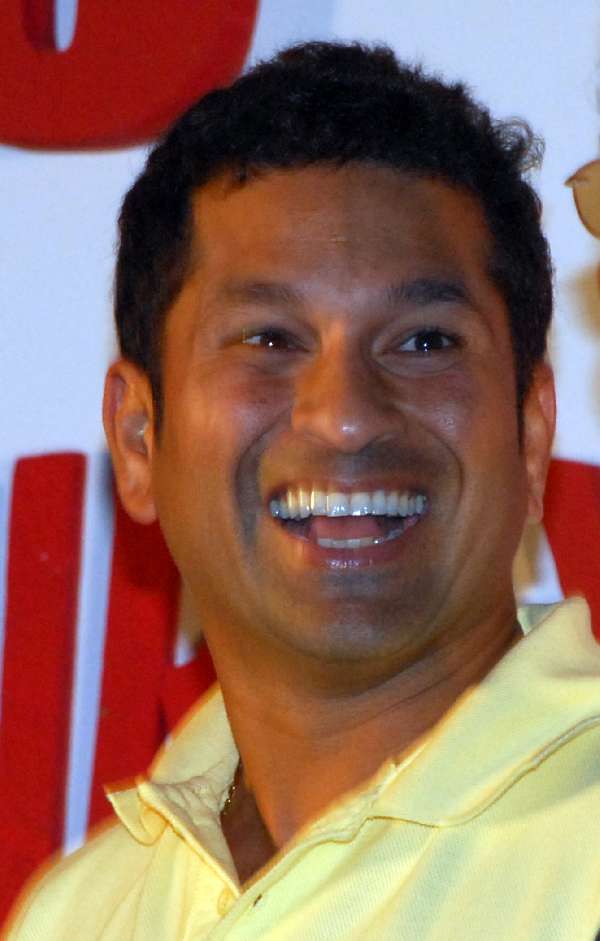
MS Dhoni is happy as Sachin Tendulkar reaches 200 in the last over, 2nd ODI, Gwalior, February 24, 2010
Sachin Tendulkar: "Since I was timing the ball well, I could be more aggressive and put pressure on the bowlers"© Associated Press
Sachin Tendulkar, who broke the record for the highest individual ODI score, overtaking Saeed Anwar and Charles Coventry on his way to the format's first double-hundred, has said his ability to bat the entire 50 overs was a testament to his fitness after having played the game for more than 20 years.
"It feels good that I lasted for 50 overs, a good test of my fitness. I'd like to bat another 50 overs at some stage and see that the fitness level doesn't drop," Tendulkar said after his effort helped India take a unassailable 2-0 lead in the series. "The ball was coming onto the bat and I was striking the ball well. So when everything falls into its place, it feels nice. It was one of the innings where I felt I was moving well. Since I was timing the ball well, I could be more aggressive and put pressure on the bowlers."
Tendulkar, while dedicating his feat to the people of India, credited coach Gary Kirsten for the team's success in both forms of the game after the debacle in the World Cup in the Caribbean. "I've enjoyed various challenges; after the 2007 World Cup things have looked different and I'm enjoying the game," he said. "The credit also goes to Gary [Kirsten], he has really held the team beautifully. It's about togetherness and playing for each other. You see during the practice sessions that Gary himself trains as hard as anyone else, or probably harder than anyone else as he's the one giving us practice all the time."
Tendulkar said he sensed an opportunity to break the record and reach a double-century when he had gone past 175 in the 42nd over. The record eventually came in the 46th over, and the 200 in the 50th. "When I was near 175-180, I thought I could get a 200 as there were quite a few overs left," he said. He added that he would prefer his achievement to be upstaged by an Indian. "I don't play for records, I play for enjoyment and play with lots of passion. That's how cricket started. I didn't start playing cricket to break all the records; it's happened along the way. The dream was to play for India and do my best.
"I don't think any record is unbreakable. Records are made to be broken. I hope that if this record is broken, it's done by an Indian."